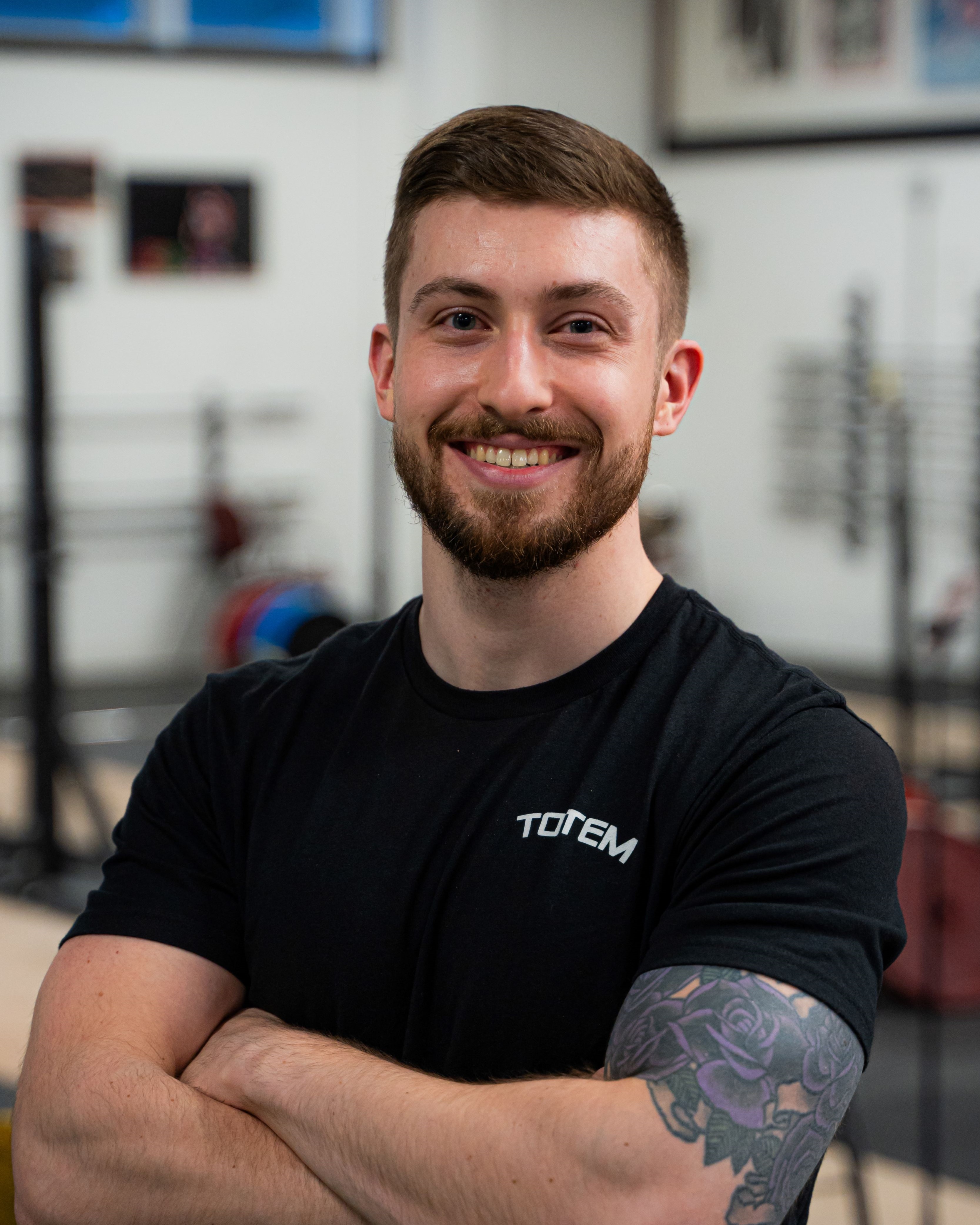
Tyler Boyd, PT, DPT, COMT, CSCS, BRM
Co-Owner, Doctor of Physical Therapy, Certified Strength and Conditioning Specialist

A look at what to expect during a one-on-one physical therapy evaluation at Totem, from discussing your symptoms and goals to movement assessment, treatment planning, and next steps.
Starting physical therapy can come with a lot of questions.
What will the therapist ask? Will you have to stop training? What kinds of movements will they test? Will you receive treatment during the first visit? And, perhaps most importantly, will you leave knowing what to do next?
At Totem Training and Performance, a physical therapy evaluation is designed to answer those questions.
Rather than rushing through a checklist or handing you a generic exercise program, your evaluation is a one-on-one session with a Doctor of Physical Therapy focused on understanding your symptoms, how you move, what you want to return to, and what may be preventing you from getting there.
If you are considering a physical therapy evaluation in Bridgeville, PA, here is what you can expect during your first appointment at Totem.
Before assessing your strength, mobility, or movement, we want to understand the person behind the problem.
Your evaluation begins with a detailed conversation about what you are experiencing and how it is affecting your life.
We may discuss:
This part of the evaluation matters because pain alone does not tell the whole story.
Two people can walk into physical therapy with the same area of pain but have completely different goals, training histories, movement demands, and contributing factors. Your treatment should reflect those differences.
At Totem, the goal is not simply to identify where you hurt. It is to understand how that problem fits into the bigger picture of how you move, train, work, and live.
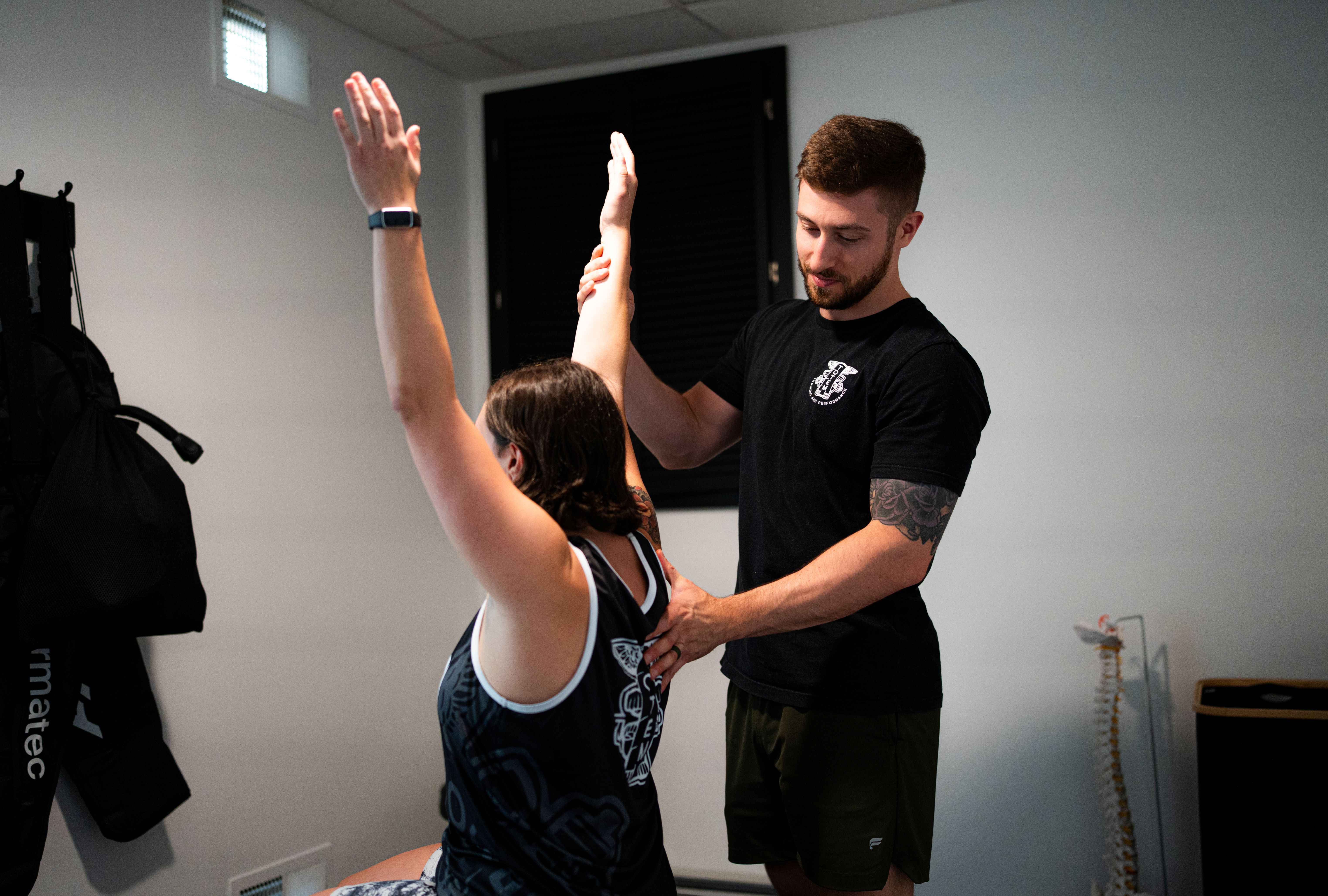
Once we understand your history and goals, we move into the physical portion of the evaluation.
The exact assessment will vary based on your symptoms and what you are trying to return to, but it may include looking at:
For someone experiencing knee pain, for example, the evaluation may look beyond the knee itself and assess the ankle, hip, strength, balance, and movement strategies that may influence the problem.
For someone trying to return to lifting, the assessment may include movements such as a squat, hinge, press, or other exercise connected to their symptoms.
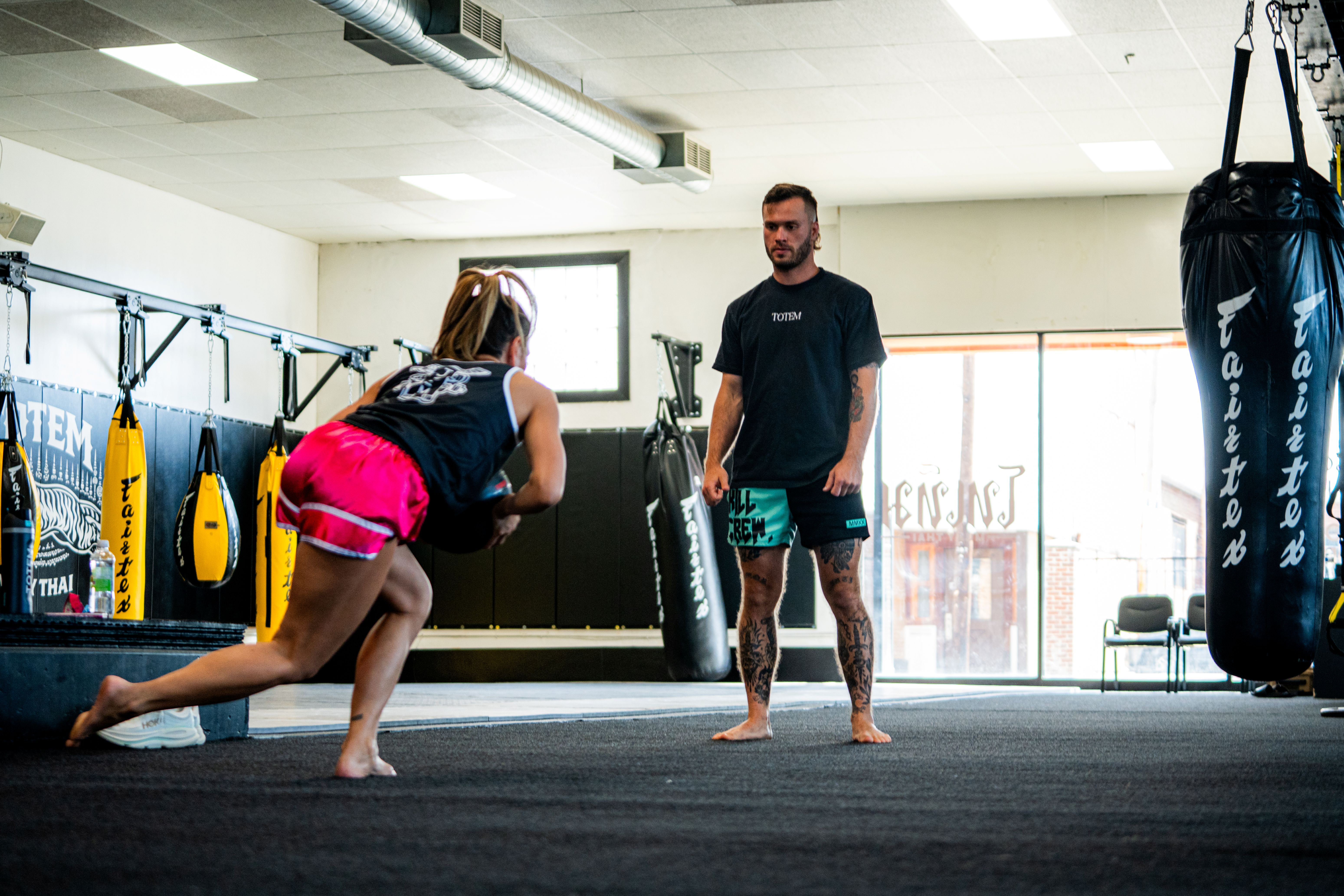
Totem’s Bridgeville facility is intentionally equipped for both rehabilitation and performance training, allowing assessments and treatment to extend beyond the traditional treatment table when appropriate.
That is particularly important for active adults and athletes. If your goal is to return to deadlifting, running, golfing, playing a sport, or training several days per week, your evaluation should eventually account for the demands of those activities.
A physical therapy evaluation is not simply about finding every mobility restriction or strength difference.
It is about determining which findings actually matter.
After completing the assessment, your physical therapist will begin connecting your symptoms, movement findings, training demands, and goals.
Sometimes the area that hurts is the primary problem. Other times, contributing factors elsewhere may be affecting how you tolerate a particular movement or activity.
The purpose of the evaluation is to develop a clearer picture of what may be contributing to your symptoms and identify the factors that can realistically be changed.
Totem’s concierge physical therapy model emphasizes identifying the underlying factors affecting movement rather than simply treating symptoms in isolation.
Getting out of pain is important, but it usually is not the entire goal.
You may want to:
Those goals help determine what successful physical therapy should actually look like.
At Totem, rehabilitation and performance are treated as part of the same continuum. The process does not necessarily end simply because your symptoms have improved. Your plan can progress toward rebuilding the strength, movement capacity, and confidence required for the activities you want to return to.
One of the most important parts of your evaluation happens after the assessment.
We explain what we found.
You should leave with a better understanding of what may be contributing to your symptoms, what we recommend addressing, and what the next phase of the process looks like.
Depending on your situation, your initial plan may include:
Our goal is to remove as much uncertainty as possible.
Rather than simply being told to rest or avoid certain activities indefinitely, you should understand what you can do now and how we plan to progress from there.
Not necessarily.
One of the most common concerns we hear from active adults is that seeing a physical therapist will automatically mean being told to stop training.
While there are situations where temporarily modifying an activity is appropriate, complete rest is not always the answer.
Your physical therapist may instead recommend changing variables such as:
This can allow you to continue training what you safely can while gradually rebuilding tolerance in the areas that need attention.
Because Totem combines rehabilitation and performance principles, the goal is to help you remain as active as reasonably possible while working toward your larger goals.
When appropriate, your first visit can include initial treatment or exercises based on what is identified during the evaluation.
However, the evaluation itself is important.
Before choosing an exercise, manual technique, or training modification, we want to understand what problem we are trying to solve.
Treatment may eventually include a combination of hands-on care, targeted exercise, strength development, mobility work, and progressive return to more demanding movements.
The specific combination depends on you.
Wear comfortable clothing that allows you to move.
Athletic clothing is generally a good option, particularly if your symptoms are related to exercise, lifting, running, or sport.
If there are specific shoes, braces, or other equipment you regularly use when experiencing the problem, bringing them may also be helpful.
For training-related issues, we may want to see the movements or activities that normally create symptoms, so arriving prepared to move gives us more useful information.
If applicable, consider bringing:
You do not need to arrive having figured everything out yourself.
That is part of the reason for the evaluation.
Your next step depends on what we identify and what level of support makes sense for your goals.
Totem operates as an out-of-network, cash-based practice, which allows appointments to remain fully one-on-one rather than being dictated by insurance restrictions or a high-volume clinic model.
From there, your physical therapist can recommend an appropriate path forward and explain how treatment may progress over time.
As you improve, the focus can shift from reducing symptoms toward rebuilding strength, increasing capacity, and preparing you for the demands of normal training and activity.
The objective is not simply to feel better temporarily.
It is to create a plan that helps you return to what you want to do—and gives you the tools and capacity to continue doing it.
An evaluation may be a good starting point if:
You also do not need to wait until a problem becomes severe.
Addressing an issue while you are still able to remain active can often make it easier to understand your current limitations and develop a plan around the activities you are already performing.
The first physical therapy visit should give you more than a list of exercises.
It should give you clarity.
At Totem Training and Performance, your evaluation is an opportunity to understand what you are experiencing, assess how your body is currently moving, establish the goals that matter to you, and build an initial plan for moving forward.
Our Bridgeville facility serves active adults, athletes, and individuals throughout Pittsburgh’s South Hills who want a more individualized approach to rehabilitation and performance.
If pain or an injury is keeping you from training, performing, or participating in the activities you enjoy, the first step is understanding what is going on.
Explore expert insights on physical therapy, strength training, injury recovery, and performance—designed to help you move better and stay pain-free long-term.