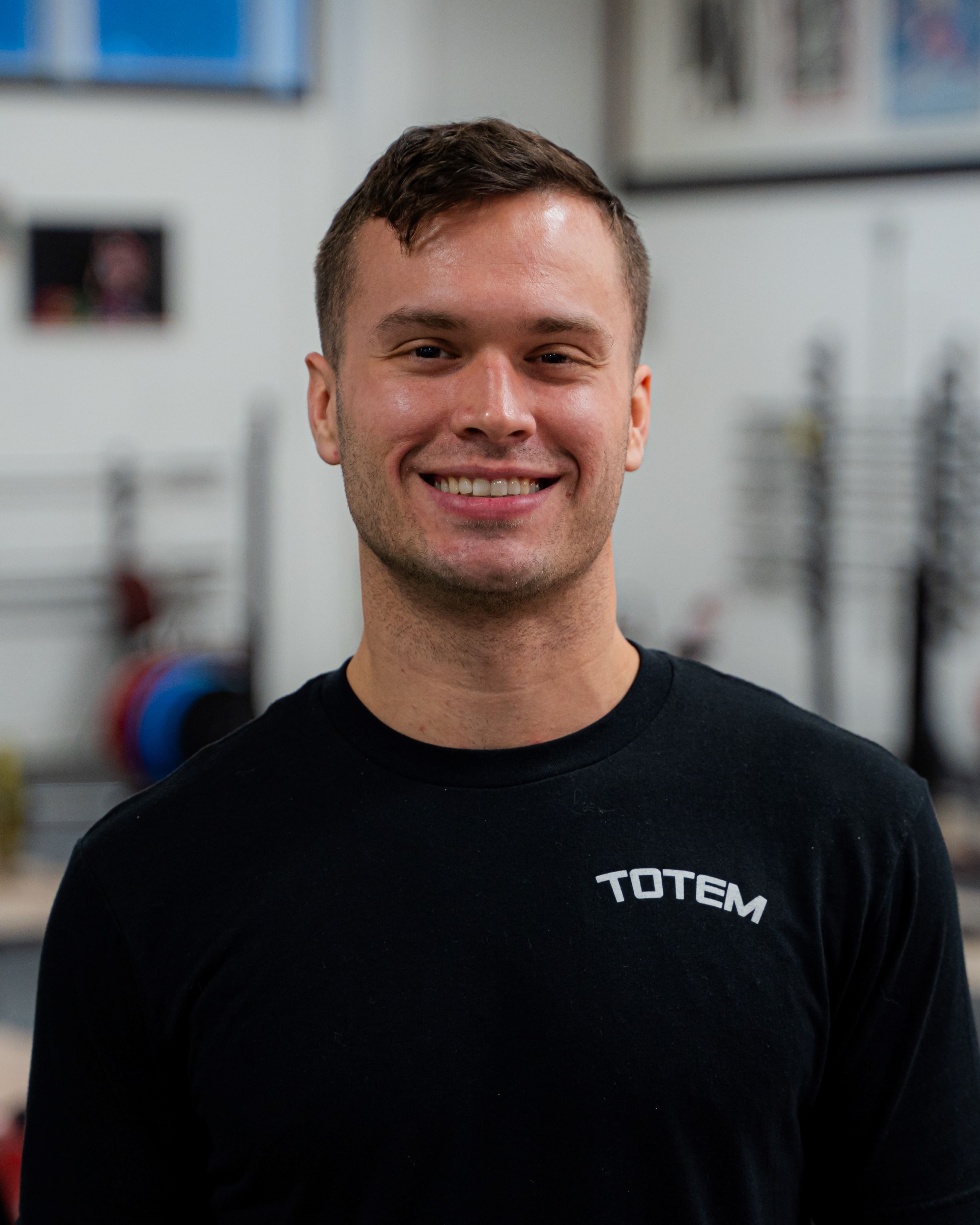
Liam Carlin, CSCS, SFC
Co-Owner, Personal Trainer, Certified Strength and Conditioning Specialist, Head Muay Thai Coach

Struggling with energy or strength in your workouts? Learn what to eat before lifting to improve performance, recovery, and consistency.

Most people don’t struggle in the gym because they aren’t working hard enough.
They struggle because their performance is inconsistent. Some days feel strong, others feel flat. Energy drops off halfway through a session. Progress slows down, even when effort stays high.
In many cases, this isn’t a programming issue.
It’s a fueling issue.
Pre-workout nutrition plays a direct role in how your body performs under load. It affects how much force you can produce, how long you can sustain effort, and how well you recover afterward. When it’s neglected—or approached randomly—training becomes unpredictable. And when training is unpredictable, progress becomes difficult to sustain.
When it’s done correctly, everything feels different. Strength becomes more repeatable. Energy stabilizes. Workouts become something you can build on, not just get through.
Your body requires available energy to perform at a high level.
If you go into a session under-fueled, your output will reflect it. You’ll fatigue faster, your movement quality may break down, and your ability to progressively overload—arguably the most important factor in long-term progress—becomes limited.
Over time, this doesn’t just impact results. It increases the likelihood of compensation patterns and overuse injuries, especially as fatigue accumulates across sessions.
On the other hand, when your body is properly fueled, training becomes far more consistent. You’re able to express strength more reliably, maintain better control through movements, and recover in a way that supports continued progress. This is where training starts to compound.
Pre-workout nutrition doesn’t need to be complicated, but it does need to be intentional.
Carbohydrates are the primary driver of performance. They provide the energy your body uses during training, particularly during higher intensity efforts. Without adequate carbohydrate intake, it’s common to feel sluggish, weak, or unable to maintain output across a full session.
Protein plays a supporting role, helping to minimize muscle breakdown and support recovery following training. While it won’t directly fuel your workout in the same way carbohydrates will, having protein available contributes to the overall adaptation process.
Fat, while still important in a general nutrition plan, should be managed more carefully before training. Because it slows digestion, too much fat in a pre-workout meal—especially closer to your session—can leave you feeling heavy or sluggish. In most cases, it’s best to keep fat intake lower leading into training, particularly when time is limited.
Even with the right foods, timing can make or break how you feel during a workout.
If you have a few hours before training, a more complete meal tends to work well. This gives your body enough time to digest and absorb nutrients, providing a steady source of energy throughout the session.
As you get closer to your workout, meals should become lighter and easier to digest. About an hour before training, simpler combinations of carbohydrates and protein tend to be most effective. Within 30 to 60 minutes, quick sources like fruit or a protein shake can provide a small boost without causing discomfort.
This is highly individual, but the goal is always the same: to enter your session feeling energized, not full, sluggish, or under-fueled.
The issue for most people isn’t a lack of information—it’s inconsistency and misapplication.
Some don’t eat enough before training, especially if they’re trying to lose weight, which leads to poor performance and stalled progress. Others eat too close to their session and feel heavy or uncomfortable. Many rely heavily on caffeine or pre-workout supplements, using stimulation to mask a lack of proper fuel.
Over time, these habits create a disconnect between effort and outcome. You may be working hard, but your body simply doesn’t have what it needs to perform and adapt.
You don’t need complex recipes or rigid meal plans to get this right.
A meal built around a quality protein source and a digestible carbohydrate source is more than enough for most people. Something as simple as chicken and rice, Greek yogurt with fruit, or a protein shake paired with a banana can be highly effective when timed appropriately.
What matters most is consistency. When your fueling becomes predictable, your performance follows.
Even when pre-workout nutrition is dialed in, it’s still only one part of the equation.
If your training lacks structure, progression, or alignment with your goals, you’ll still find yourself plateauing or dealing with recurring issues. Nutrition can support performance—but it can’t replace a well-designed program.
Real progress happens when everything works together. Training, nutrition, recovery, and progression all need to be aligned.
At Totem Training and Performance, we take a different approach.
We don’t just give you workouts or general advice. We build a personalized system around you—your goals, your injury history, your schedule, and your performance needs.
That includes:
So you’re not left guessing what to do—you’re following a plan that actually works.
If you’re tired of inconsistent workouts and want a clear path forward, we can help.
👉Apply for personal training at Totem Training and Performance and start working 1-on-1 with a coach who understands both performance and rehabilitation.
Train with intent. Progress with clarity.
Explore expert insights on physical therapy, strength training, injury recovery, and performance—designed to help you move better and stay pain-free long-term.