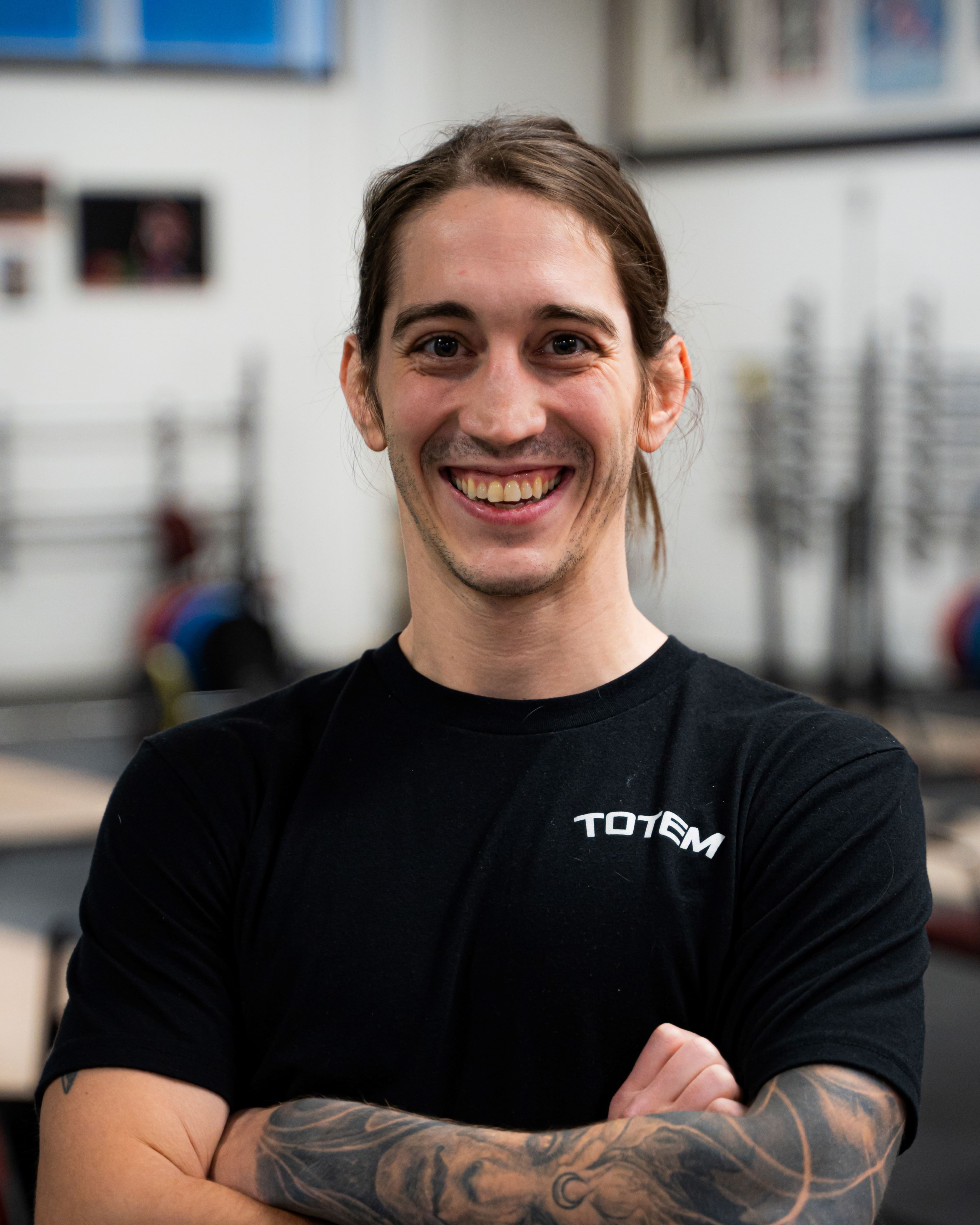
Gage Swartz, PT, DPT, COMT, CSCS, USAW, FMS
Co-Owner, Doctor of Physical Therapy, Certified Strength and Conditioning Specialist

Learn how to train as you age to build strength, improve performance, and stay healthy with a smarter approach.

Getting older doesn’t mean slowing down.
But it does mean your training needs to evolve.
The reality is that as we age, our bodies change—strength, recovery, coordination, and work capacity all require more intentional development. What used to work in your 20s doesn’t always carry over the same way in your 30s, 40s, and beyond.
But this isn’t a limitation.
It’s an opportunity to train smarter.
With the right approach, you’re not just maintaining—you can continue to build strength, improve performance, and feel better year after year.
Aging isn’t defined by a single factor—it’s the accumulation of several small shifts that influence how your body performs and recovers.
Over time, there’s a gradual reduction in motor neurons, which affects how efficiently your body recruits muscle during movement. This can show up as decreased coordination, slower reaction time, or reduced force output.
Muscle mass also tends to decline through a process known as sarcopenia. Without consistent strength training, this leads to noticeable losses in strength and physical capacity.
At the same time, activation speed slows. Movements that once felt explosive may feel delayed or less responsive. Bone density can decrease, metabolism becomes less forgiving, and cardiovascular fitness requires more deliberate effort to maintain.
Individually, these changes are manageable. But if ignored, they compound.
That’s where most people start to feel like they’re “slowing down.”
Most people don’t decline because of age.
They decline because their training doesn’t adapt.
They stop lifting heavy. They avoid moving fast. They reduce intensity instead of managing it. Over time, this leads to a gradual loss of strength, coordination, and resilience.
The goal isn’t to train less.
It’s to train more intentionally.
A well-structured program should address multiple qualities—not just strength, not just cardio, but a combination of both along with movement quality and recovery.
Maintaining cardiovascular fitness is essential. This doesn’t mean endless low-intensity cardio, but rather consistent exposure to aerobic work that supports recovery, endurance, and overall health.
Strength training remains the cornerstone. Lifting at least two to three times per week helps preserve muscle mass, bone density, and metabolic function. More importantly, it maintains your ability to produce force—something that directly impacts how you move and perform.
One of the most overlooked elements is speed.
As activation slows with age, it becomes even more important to train intent. Moving weight with speed—whether through controlled explosive lifts, plyometrics, or tempo work—helps maintain fast-twitch muscle fibers and overall power output.
Mobility and movement quality should also be integrated, not treated as an afterthought. Training through full ranges of motion, maintaining joint control, and addressing limitations proactively all contribute to long-term performance.
And finally, recovery.
You don’t need less training—you need better recovery between sessions. Managing volume, sleep, and overall stress becomes a key part of making progress.
When these elements are combined correctly, training starts to feel different.
You’re not just working out—you’re building capacity.
Strength carries over into daily life. Movements feel more controlled and confident. You’re able to push when it matters, without constantly feeling beat up or limited.
This is what most people are actually looking for—not just exercise, but performance that lasts.
“It’s just old age” is one of the most common—and most limiting—mindsets in fitness.
Yes, your body changes.
But decline isn’t inevitable.
With the right structure, you can continue to improve, build strength, and perform at a high level well beyond what most people expect.
The difference comes down to how you train.
If your current training feels inconsistent, random, or no longer effective, it’s not a motivation problem—it’s a structure problem.
Our online training programs are built specifically for individuals who want to:
This isn’t generic programming.
It’s a structured approach designed to help you perform now—and continue performing long-term.
Explore expert insights on physical therapy, strength training, injury recovery, and performance—designed to help you move better and stay pain-free long-term.